PoH-Code: poh.36343
Memorial for the Victims of Nazi Military Justice
2013-12-31 – 2014-12-30
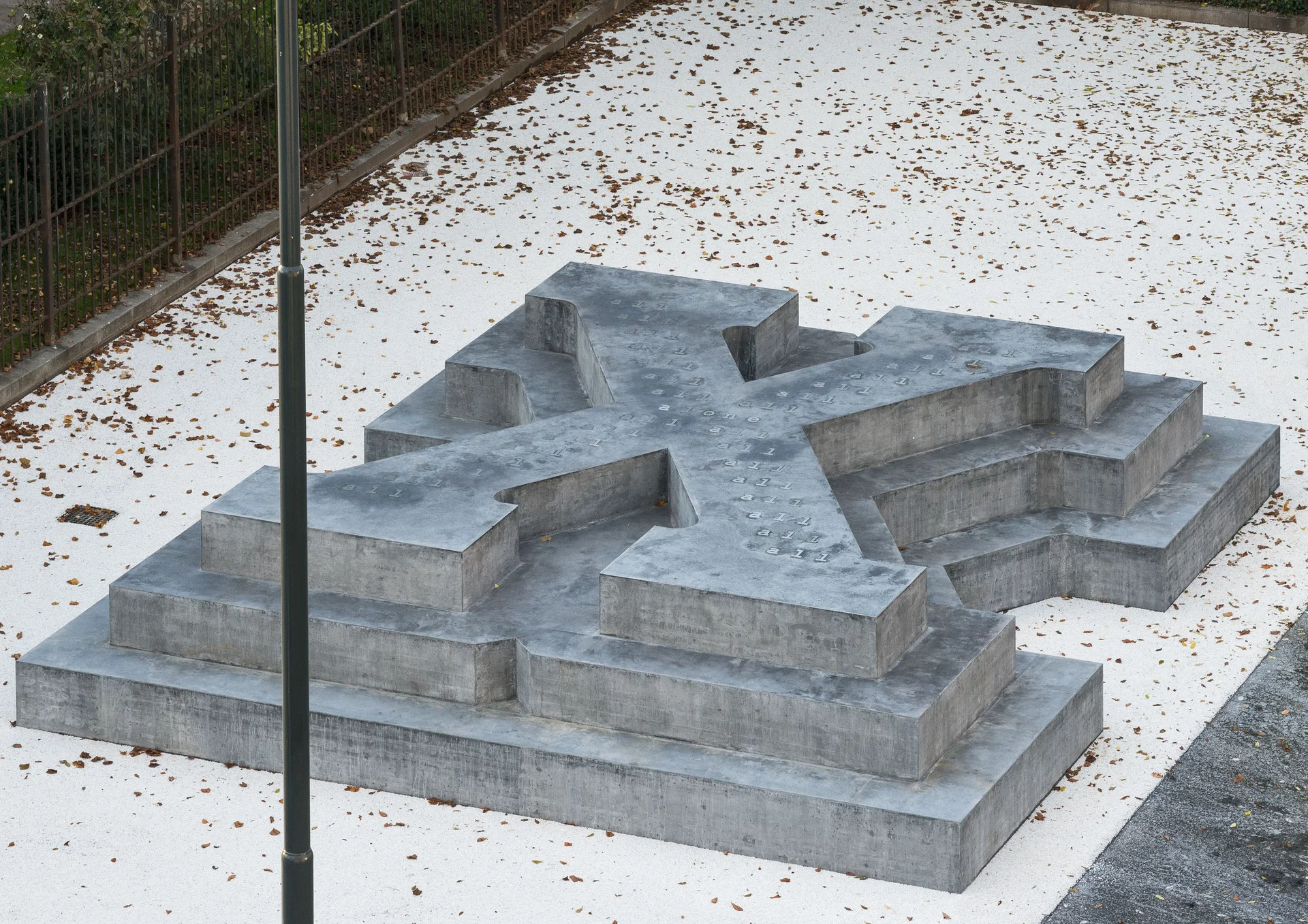
Foto: KÖR/Foto: Iris Ranzinger, 2014
KÖR/Foto: Iris Ranzinger, 2014 · CC-BY-NC-4.0 · gams.uni-graz.at
The Memorial for the Victims of the NS Military Justice at Ballhausplatz, also known as the "Deserter Memorial," was opened on October 24, 2014. The sculpture by artist Olaf Nicolai is dedicated to deserters and other people persecuted by military courts of the NS state across Europe. Military courts of the German armed forces imposed more than 30,000 death sentences against their own soldiers and prisoners of war of the Allies, as well as against civilians in countries occupied by the Wehrmacht. A large part of these death sentences were directed against deserters and "Wehrkraftzersetzer." Thousands of additional soldiers died after being convicted in so-called probation units at the front. In the Second Republic, many of those executed and survivors of persecution were for a long time not recognized as victims of National Socialism. It was only from the turn of the millennium that the realization spread that the German military justice had unconditionally served a criminal war effort. In 2009, the National Council rehabilitated all those convicted and persecuted. Olaf Nicolai's concrete sculpture represents a three-stage, lying X. The inscription "all alone" is embedded in the upper stage. Olaf Nicolai explained his idea as follows: "This memorial shows respect to those who made their own decision to resist foreign determination and to stand up against the existing system through their independent actions. The significance of the personal decision to be a dissident, this active moment, is for me the relevance. From this perspective, I conceived the oversized, lying X with an inscription on the upper level. What happens to the person who climbs up the three-stage base to read the inscription? (…) The inscription shows – in the truest sense of the word – the implied tension between the individual and the community. It is about the relationship to oneself, the 'alone,' the willingness to stand alone for something. The text in English, which goes beyond the national framework and is understandable for all, is now read at a place where one is surrounded by state institutions. The question of one's own position is thus immediately and concretely experienced as a recurring issue." The establishment of the memorial by the city of Vienna goes back to a long-standing demand of the "Committee of Persons for Justice for the Victims of NS Military Justice."
Translation · AI tier 5
Sources
- DERLA — Denkmal für die Verfolgten der NS-Militärjustiz (78380ce8-e830-4d3a-b31b-3491303fc577) — DERLA — Denkmal für die Verfolgten der NS-Militärjustiz
Evaluations
- Access (ab 2026-07-18): Open access
- Spatial accuracy: 4 — Accurate
Location & map
Map position available (Point) · spatial accuracy: 4 — Accurate
Textual location description
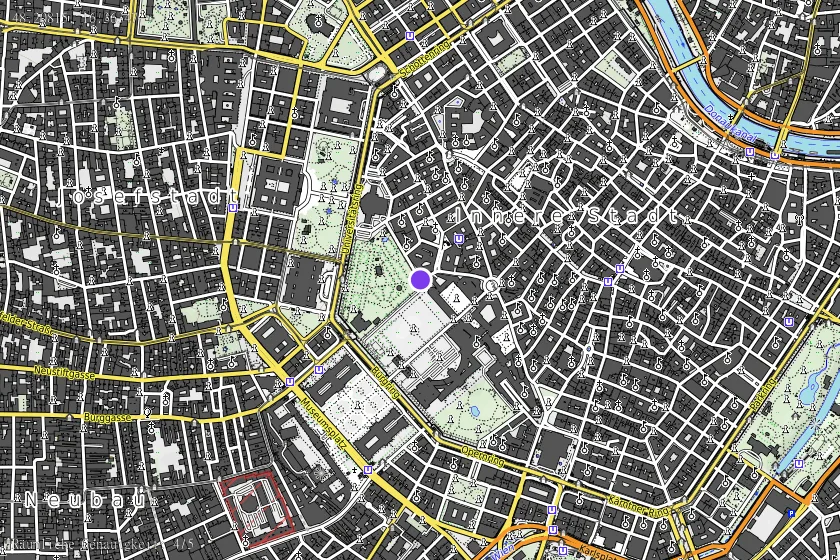
Ballhausplatz, 1010 Wien