PoH-Code: poh.24972
Dunaj — rural victims
—
partizanstvo.si / Arhiv Geopedia · CC-BY 4.0 (privzeta licenca) · Preneseno iz Geopedije.
On the marble plaque, 13 fresh strawberries and a blunted axe are attached beneath the text, symbolizing the heads of victims and the guillotine.
In the memorial room
entered through doors with the inscription "GEDENKSTÄTTE", one steps into an empty ante-chamber. The district court president Friedrich Forsthuber has announced that a more extensive representation of the victims of the National Socialist judicial regime will be installed there in 2024. Through the following door inscribed "ZUM HINRICHTUNGSRAUM" (To the Execution Chamber), one enters to the left a large photograph of the guillotine, with which the Nazis executed condemned prisoners. In the corner, covered with ceramic tiles, is an altar next to which a pipe is placed; at its end was attached a tube for splashing blood. On the wall are holes for candles — now covered by a mesh frame. All memorial panels are on the right wall. The last wall holds several ropes in the colors of the Austrian flag and bears the inscription "Niemals vergessen" (Never forgotten).
After Austria's annexation to the Third Reich in 1938, many local Slovenes were conscripted into the Wehrmacht. Some did not respond to the call-up but went underground, many on the territory of neighboring Yugoslavia. Similarly, some had already served in the military. Among them was Tomaž Olip from Sel. When the Germans occupied Yugoslavia in 1941, he returned home and in June 1942 built a secret bunker in Hlipovčnik's orchard. Like many other deserters called "green belts," he had often helped partisans but did not join them. After the arrest of captured Petra Blažič, the Gestapo entered the bunker on December 1, 1943, and took Olip and Jaka Oražeja with him. In the bunker, he found Tomaž Olip's diary. During the first months of 1943, several arrests of activists from Koroško followed, some also revealed based on Olip's diary. In late March, the Celovski Gestapo filed complaints against 134 for high treason. Fifty-three, including those mentioned, were tried at a human tribunal in Celovec on April 7. The notorious judge Roland Freisler, who had come from Berlin for this occasion, sentenced them to death by guillotine over two days starting the next day. They were taken to the "grey house" on the Danube and executed with the guillotine on April 29. Although not all of those executed came from Sel, some from surrounding areas are known as "village victims." (Summarized after Brigitte Entner: What Has a Human Been Through!/Was der Mensch alles erlebt! Mohorjeva družba, Celovec 2018)
.
The plaque was placed at the 50th anniversary of the crime by the Center for Austrian Ethnicities and Sel.
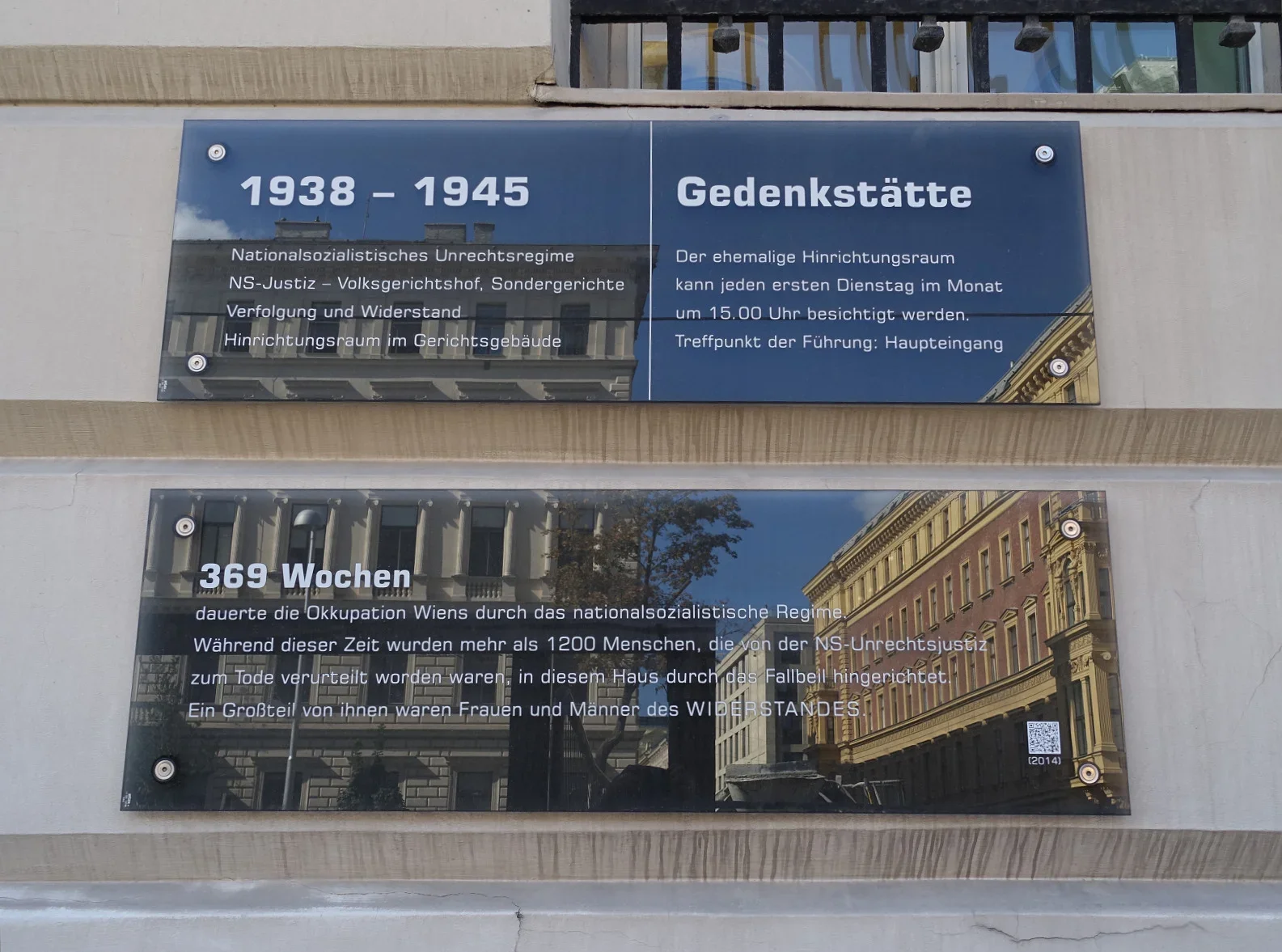
The room is accessible to the public on the first Tuesday of each month from 3:00 PM. Information in German and English about this is displayed on glass panels near the entrance to the court.
See the memorial marker at the church in Austrian Koroška, Sel - Fara
Translation · AI tier 5
Sources
- Partizanstvo.si — Partizanski spomeniki (#8574) (d639bea1-d2e8-4db2-88d8-2532f719c1d9) — Partizanstvo.si — Partizanski spomeniki (#8574)
Links
Location & map
Map position available (Point) · spatial accuracy: 4 — Accurate
Textual location description
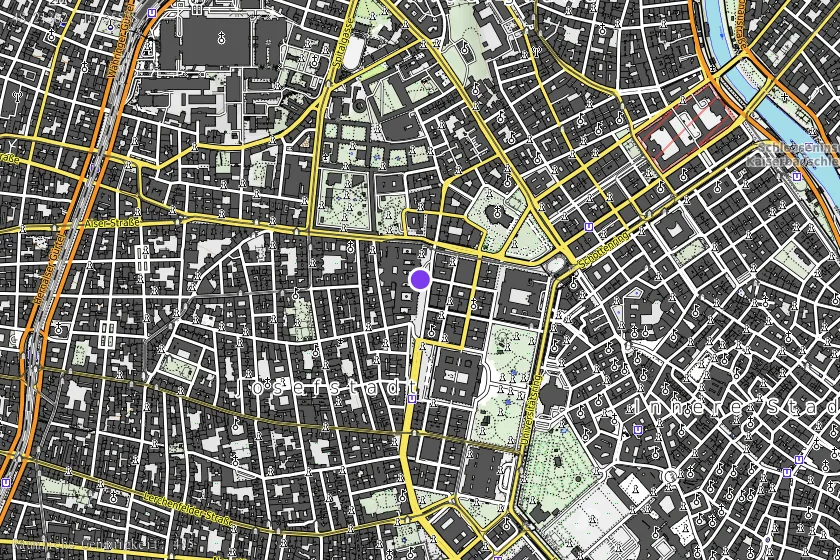
Dunaj, Plošča je nameščena v spominski sobi (nekdanjem prostoru za usmrtitve) v pritličju deželnega sodišča za kazenske zadeve ("siva hiša") na Landesgerichtsstrasse 11.