PoH-Code: poh.36500
Gisela-Legath-Gasse
2014-12-31 – 2015-12-30
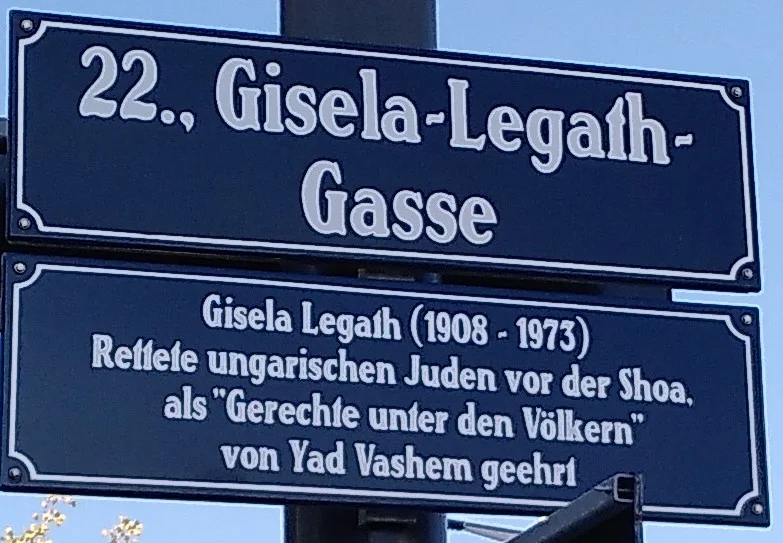
Foto: Nils Münger
Nils Münger · CC-BY-NC-4.0 · gams.uni-graz.at
The farmer Gisela Legath lived in Deutsch Ehrensdorf in South Burgenland in 1945 with her two children, the then fourteen-year-old Martin and the then thirteen-year-old Frieda. Legath's husband was a soldier in the Wehrmacht. In Burgenland, the NS regime forced 80,000 Hungarian Jews to work at that time. Two of these forced laborers were György Krausz from Szombathely and his friend Cundra (surname unknown), who were employed in a mill in Eberau. When the Red Army approached, the National Socialists drove the Jews on a death march to the concentration camp Mauthausen. Krausz and Cundra managed to escape. They were hidden by Gisela Legath in a grain silo. Together with her two children, she provided the two men with water and food. A few days later, the Wehrmacht set up a field kitchen on the Legath family property, directly next to the grain silo. When one of the soldiers discovered the hidden Jews, Legath convinced him not to report them and thus deport them, but rather to continue using them for work. Thus, Krausz was able to work as a cook until the Wehrmacht withdrew, and Cundra as a tailor. On January 12, 1994, Gisela Legath was jointly awarded the honor "Righteous Among the Nations" by Yad Vashem together with her two children, Martin and Frieda.
Translation · AI tier 5
Sources
- DERLA — Gisela-Legath-Gasse (40ec5ac5-70ed-478a-8cf0-0b5790120f95) — DERLA — Gisela-Legath-Gasse
Evaluations
- Access (ab 2026-07-18): Open access
- Spatial accuracy: 4 — Accurate
Location & map
Map position available (Point) · spatial accuracy: 4 — Accurate
Textual location description
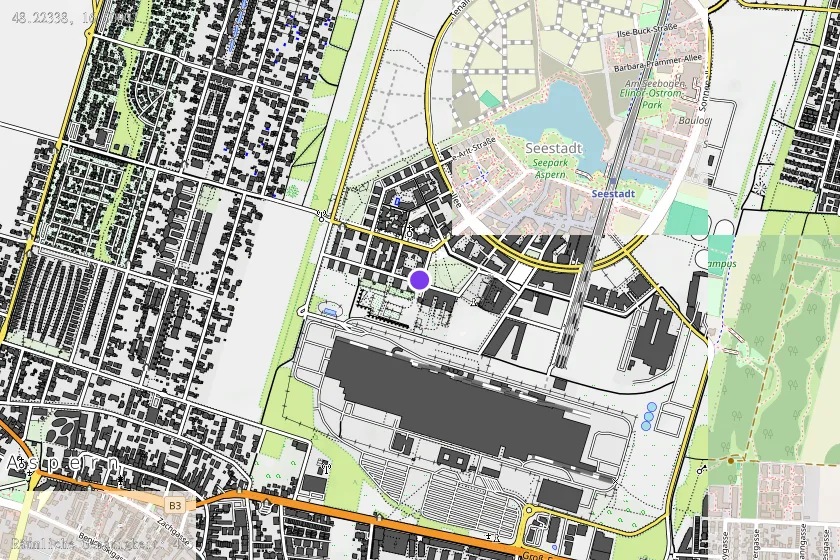
Gisela-Legath-Gasse, 1220 Wien