
PoH-Code: poh.21627
Gravina, Carbonara, establishment of the Third Overseas Brigade, Italy
—
partizanstvo.si / Arhiv Geopedia · CC-BY 4.0 (privzeta licenca) · Preneseno iz Geopedije.
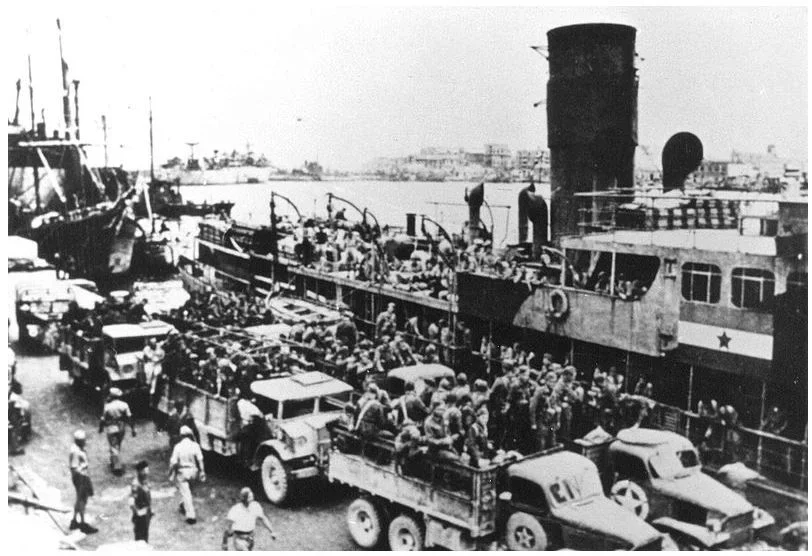
After the departure of the 1st and 2nd over-the-sea brigades from Gravina, only the party political activist remained there, whose task was to recruit new members for the over-the-sea brigades. Delegates were dispatched to all major cities in southern Italy, where they operated continuously. The command of the camp (the commander was Dr. France Hočevar, a former communist and native) also sent its delegation to northern Africa, Sicily, and Sardinia, to inform coastal Slovenes and Istrian Croats about the situation in their homeland. As the Allied front moved northward through Italy, our delegates also moved just behind the front line, giving the Yugoslavs their first information and directing them to the Gravina partisan camp. The new contingent, which arrived in Gravina in the last days of November and the first days of December 1943, which was the success of our delegates' activities in Sicily and especially in Calabria, was organized into companies and battalions in a new brigade, which later received the name 3rd over-the-sea. By the end of December 1943, 1100 recruits were trained daily in military skills and participated in the cultural and political life of the camp. After three months of training and numerous maneuvers, the brigade set sail for Vis in early March 1944. Upon departure from Italy, it numbered 1880 men. Among them were 1120 Slovenes, 450 Croats (mostly Istrians and some Dalmatians), 150 Italians, mainly from southern Italy and Istria, 125 Montenegrins, 15 Serbs, and 20 recruits of other nationalities. New recruits arriving from Italy joined the brigade on Vis. It also formed auxiliary units (a liaison squad, a mortar squad, an administrative squad, an engineering squad, etc.) and thus totaled 2245 recruits. In early June 1944, comrade Tito and members of the Central Committee of the Communist Party of Yugoslavia and the National Liberation Committee of Yugoslavia arrived on Vis. At that time, the island was already fortified. Each brigade of the 26th Division received its own sector for defense against a possible German attack. Before the general autumn offensive, individual units of the brigade participated in several-day-long independent actions. In September, the brigade participated in the liberation of Korčula and the Pelješac Peninsula. Larger battles took place near Split, especially along the coast from Split towards Trogir. The battle for Kaštel Sućurac and the sudden attack saved the cement factory from destruction, which the Germans had prepared. Then came the big battle at Knin, in which the 3rd over-the-sea brigade had a very difficult task. The battles for Knin lasted more than a month. The fact that the brigade lost more than 400 recruits indicates the intensity of the fighting. After the battles for the liberation of Herzegovina and Mostar, the brigade also participated in the battles for the liberation of Lapac, Bihać, Gospić, and the Croatian coast. Upon arriving at the old Yugoslav-Italian border, the brigade, as part of the Tržiška operation, due to its composition, received a special task from the staff of the 4th Army to break through with units of the 43rd Division into the enemy's rear and then advance towards Trieste. This brigade also has special merits for the liberation of our coast. The brigade's soldiers fought hard for several days around Klan, 145 Ilirska Bistrica, Šapjan, Rupe, and Lipe. At the surrender of Germany, the brigade was already in Tržišče and at the mouth of the Soča River. In June 1945, the brigade withdrew to western Istria, where it operated until March 1948, when its units joined the reorganization of the Yugoslav Army in the garrison of the Yugoslav Army in Bohinjka, Gorenjska. From its establishment until the liberation of the homeland, at least 858 of its members and soldiers fell.For outstanding contributions in the wars for the liberation of the homeland, the president of the SFRY and the supreme commander of the Yugoslav People's Army, Marshal Tito, awarded the 3rd overseas assault brigade with the Order of the People's Liberation, with the Order of Merit to the People with a golden star, and with the Order of Brotherhood and Unity with a golden wreath. (More about this in the book The Third Overseas Brigade by Radula Butorović and Albert Klun.)
Source: Overseas Soldiers, M. Ivančič, Koper, 2023 Photo 3:1 - znaci.net, 3:2 Overseas Soldiers, M. Ivančič, A. Klun, 3:3 Overseas Soldiers, M. Ivančič, e-book, 2014
Motto: prekomorci123, nedokončano123
Translation · AI tier 7
Sources
- Partizanstvo.si — Partizanski spomeniki (#9028) (30d3d052-314b-4a58-85fc-2f66fa43e0e0) — Partizanstvo.si — Partizanski spomeniki (#9028)
Links
Location & map
Map position available (Point) · spatial accuracy: 4 — Accurate
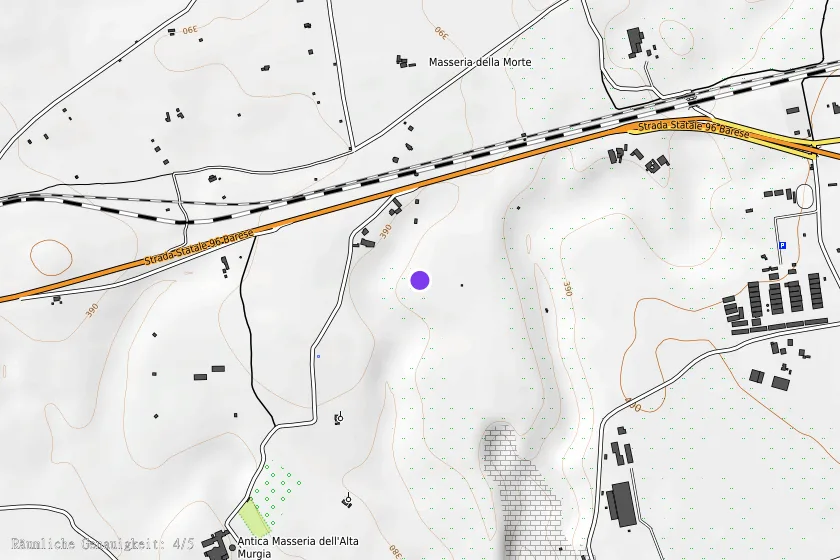
Coordinates (WGS84)40.82308° N, 16.49588° E