
PoH-Code: poh.14201
Idrija, Doprsni kip španskega borca in narodnega heroja dr. Aleša Beblerja – Primoža
—
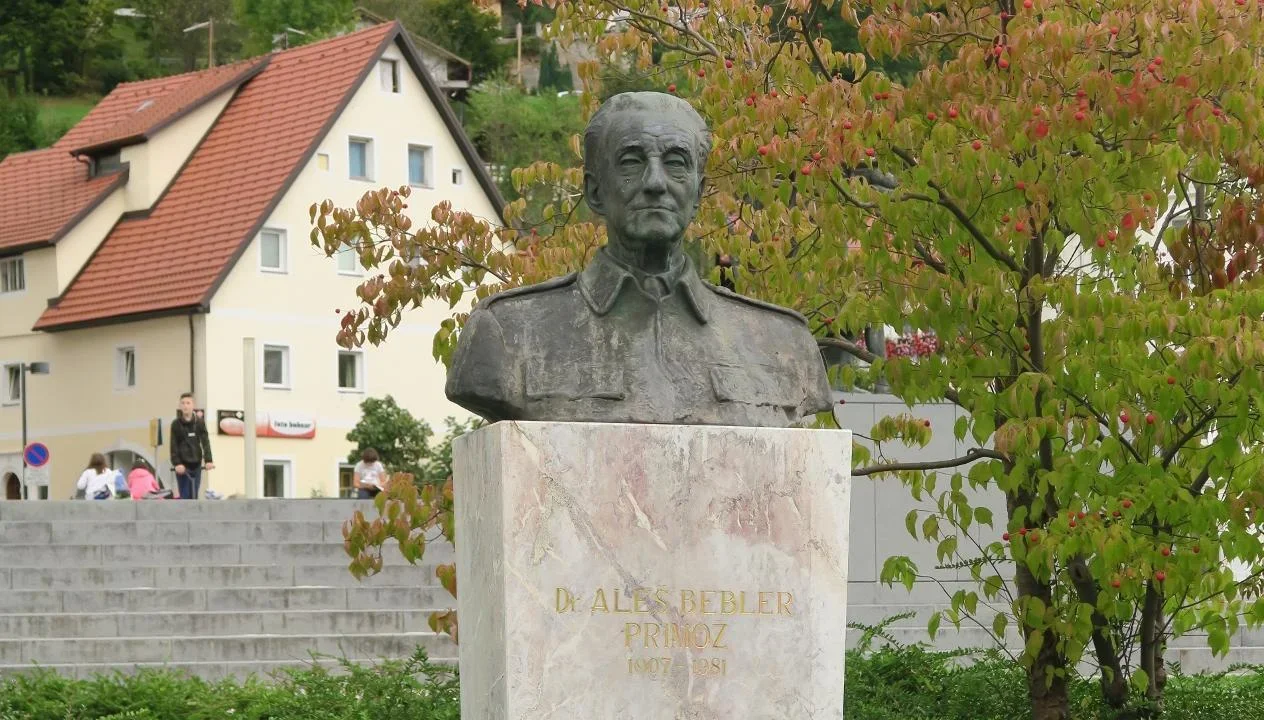
partizanstvo.si / Arhiv Geopedia · CC-BY 4.0 (privzeta licenca) · Preneseno iz Geopedije.
Aleš Bébler, (pseudonyms Primož Tratnik, Anton Hartman, ..) Slovenian Spanish fighter, partizan, politician, general, diplomat and national hero, * 8 June 1907, Idrija, † 12 August 1981, Ljubljana.
Biography summarized from Wikipedia.
Before World War II, he participated in the Spanish Civil War. During the war he was an important member of OF, after the war he represented Yugoslavia at various diplomatic conferences. After gradually withdrawing from the party, when in the end he remained only an ambassador, he spent the rest of his life as a nature conservationist. His son is a professor at the University of Ljubljana, Anton Bebler.
Childhood and youth
He was born to mother Frančiska and father Boltežar. In Idrija he attended a public school. In 1915, during World War I, the family temporarily moved to Ivan Prijatelj in Vienna due to hunger. There he continued his education and learned German at the same time. After the end of the war, the family returned to Idrija, where Italian soldiers were stationed. During conversations with them, Bebler learned the basics of Italian. Already at the age of 11, he remained with his family under Italian rule. For two years he attended the Idrija secondary school, after which he, after fleeing Italy to the Kingdom of SHS, enrolled in the secondary school in Celje and completed it in 1925. During his secondary school years, he joined the Sokol and began participating in left-wing activities. At the same time, he enrolled in the law faculties in Ljubljana and Paris. In 1929, due to his anti-capitalist and communist views, he joined the then illegal Communist Party of Yugoslavia, before that he had joined the secret organization of the communist youth SKOJ. He met Boris Kidrič and Edvard Kardelj. After two years of study in one country and another, he finally graduated from the famous Paris Sorbonne. The Yugoslav authorities forbade him entry into his country, so after finishing his studies, he had to hide in France. In 1933, he received an instruction from the party to move to the Soviet Union. There, due to secrecy, he received a false identity and forged documents under the name of a German. He got a job and changed jobs several times. He was lucky enough to leave the Soviet Union before Stalin's purges.
In Russia, he met Edvard Kardelj again, who sent him to the civil war in Spain, where he went in 1936. He obtained the forged documents in Paris, from where he went to Madrid. In the war, he helped the republic, which was fighting against the right, led by General Franco. He was wounded twice once seriously. After the war, in which dictator Franco won, he was injured and taken to France, where he was properly cared for. Since he was expelled from the country, he decided to go to Switzerland, where he was imprisoned in a Swiss prison due to illegal crossing of the border. With the help of a lawyer, he managed to obtain a Swiss travel document, which he received based on evidence that his grandfather lived in Switzerland. Then he returned to Yugoslavia, where he joined the activities of the Yugoslav Communist Party. In 1940, he began legal training, but did not complete it due to the sudden outbreak of war in Slovenia.
World War II
/no_think
World War II
During World War II, Aleš Bébler was actively involved in the Yugoslav Partisan movement. He played a significant role in organizing and leading resistance efforts against the Axis occupation forces. His leadership and strategic acumen were instrumental in several key military operations and in the eventual liberation of Slovenia. Bébler's contributions were recognized both during and after the war, and he became a symbol of resistance and national pride.
After the war, Bébler continued his political and diplomatic work, representing Yugoslavia in various international forums. His efforts in promoting peace and reconciliation in the region were widely acknowledged. He remained a prominent figure in Yugoslav politics until his death in 1981.
Bébler's legacy is remembered through numerous memorials and historical records, highlighting his role as a national hero and a key figure in the struggle for freedom and independence. His life and work continue to inspire generations in Slovenia and beyond.At the beginning of the war on 6 April 1941, members of the Communist Party established an operational committee in Ljubljana, in which Bebler was the military expert. He reached this position due to his extensive experience from Spain. The main task of the committee was to prepare the technique for sabotage actions on various roads and railways. At the same meeting at which the committee was established, they decided to set up the Liberation Front. Bebler adopted the party name Primož, which was necessary due to the illegal nature of his activities. Together with his colleagues, he began planning various partisan operations within the OF. When the Supreme Command of the partisan detachments was established in June 1941, he was appointed as the chief of staff or deputy commander. In such an important position, he had to visit various partisan detachments and talk with the organizers of the uprising. In the Ljubljana region, as deputy commander, he formed the III group of detachments. In the middle of winter 1942, he received a blood poisoning in his leg, which required surgery. Ljubljana was difficult to leave, as the Italians had set up a wire fence around the city, which hindered passage. He went through the wire in March 1942 and went to Dolenjska. In May, he helped establish the liberated territory in Dolenjska and Kočevska, where the main staff moved from Ljubljana. On 19 and 20 April 1942, Bebler went to a meeting on the Croatian side of the Kolpa, where they decided that Slovenian partisans would wear Titovka badges. At that time, Bebler had already become less valued in the party leadership, as he was an intellectual and did not align with the ideology of communism. He strongly opposed the actions of some partisans who had abused authority and committed unnecessary violence.
In the summer of 1942, a severe offensive by the Italians occurred, which threatened the liberated territory. The fourth part of this offensive was directed against the partisan base in the Kočevski Rog. At the time of the attack, Bebler was not there, as he had just gone to Notranjska, but all the main creators of the Slovenian communist revolution were there. He gathered nearby partisans into the Maneuver Battalion and ordered them to attack the Italian ring around the Rog. He established a special group, Bebler's staff, which became the reserve command of the partisan detachments.
In the village of Trebelno on 4 September, he established the Matija Gubca partisan brigade from three battalions. Then he also established the Cankar brigade. Meanwhile, he discovered that the Rog was no longer surrounded. The leadership was very angry because Bebler had on his own initiative established two brigades. As a punishment, he was relieved of his position as deputy commander of the Main Staff and sent to Primorska on 5 October. The leadership was indeed afraid of him due to his education.Kardelj ordered him to carry out a cleanup on the Coast and in the Inner Carniola and to eliminate all enemies (White Guard, occupier), and also to prevent a civil war. Bebler did not consistently follow his orders and resolved disputes diplomatically, except in the worst cases. His residence was in Bukovica near Mlečnik, where the movement's headquarters was also located. He was hidden in a well-disguised bunker beneath the hearth of the house. On 4 December 1942, he convened a meeting in the chapel near Branik, where they discussed the progress of the movement. He almost got discovered in his bunker when the Italian occupier, based on the White Guard's report, suspected that Bebler was hiding in the house. They conducted a search, but he was lucky enough not to be discovered during their search of the house. In the end, the lady was taken to prison, while the husband was arrested. Afterwards, other partisans transported him across the Italian territory to safety to the command of the Alpine Sector. He had an important task, he had to go from house to house and take care of the partisan movement.
With the Italian capitulation on 8 September, great joy spread across the Coast, and Bebler was the person around whom everything revolved. On 11 September 1943, together with his colleagues Beltram and Vilfan, he established the Primorski National Liberation Council, within which they adopted two important resolutions in the following days. The first one spoke about the general mobilization of the entire adult population, the second one about the annexation of the Coast to Yugoslavia. Soon, however, the joy was spoiled by the news that the Germans had already reached Gorica. After receiving a gift from an anti-fascist Italian soldier who had secured an airplane, Bebler decided to use it to inform the party about the German preparedness. He flew to Novo mesto, where he reported on the mass uprising on the Coast and received instructions for the annexation of this region to Slovenia. He returned to the Coast, from where he withdrew before the advancing Germans to Vojščica. In the Trnovsko forest, he fell into an enemy ambush, where the enemies wounded him. In the autumn, he had to urgently go with Francet Bevko to Kočevsko. They only reached Ljubljanski Barj, where they could not get any contact, which, as they later found out, had been broken by a German patrol. Upon returning to the Coast, they learned that they had been called to a meeting of the AVNOJ in Jajce. At that meeting, the delegates confirmed the annexation of the Coast to Yugoslavia. Afterwards, he went to Črnomelj, where the gathering of Slovenian representatives was held. He left together with Bevko and Srebrnič. Later, the Central Committee called him to White Croatia, from where he was sent to Styria in August 1944.He took over the leadership of the regional organization for Styria and Carinthia, where he was responsible for the renewal of the local organizations and the Liberation Fronts, which the Home Guard had begun to initiate measures for. In a short time, he strengthened the leadership of the resistance in Styria. The partisan army once again reinforced its reputation. In late autumn 1944, he was once again called back to White Croatia, where he was ordered to remain in the Main Staff and deal with administrative duties. Soon, he was given a task to go to Knin in the summer, where he was to explain the situation in Slovenia. Shortly after his speech, he received a telegram from Boris Kidrič, informing him that the situation had worsened. By plane, he was sent to Belgrade, where he met with Tito. There, Bebler was informed about the situation in Slovenia. He returned to the Main Staff in Slovenia, where soon the German resistance came to an end. The leadership of the OF moved to Ajdovščina, where on 5 May 1945 a new government was constituted. In triumph, the entire leadership moved to Ljubljana, where there was much celebration on the streets.
War Period
In the first Slovenian government, Bebler was given the position of Minister of Finance, which surprised him greatly, as he had never been a specialist in that field. Soon, however, Kardelj decided that he should move to the Office for Foreign Affairs in Belgrade, where he arrived in the middle of summer 1945. The main priorities at that time were preparations for the post-war peace conferences. When the ministry was divided into two parts - economic and political - Aleš Bebler took the position of assistant in the latter. Already in October 1945, he was one of the delegates to the conference on German reparations. This was followed by peace negotiations with Italy, which were among the greatest and most difficult challenges for him. He advocated for the acquisition of the entire Slovenian ethnic territory of Slovenia, but the delegation was unable to achieve this due to the strong opposition of the Western powers. In 1948, the Yugoslav delegation went to the peace conference on the regime of navigation and the rights of riparian states on the Danube. At this conference, deep rifts between the Soviet Union and Yugoslavia were already visible. After the deepening of the crisis, Bebler was tasked with, through contacts with Western diplomats, investigating the possibility of obtaining favorable loans and economic assistance. The State Undersecretary remained in this position until the autumn of 1949, during which time he made a great contribution to increasing contacts with Western countries.At the end of the year, he assumed an important position for Yugoslavia as a permanent representative at the UN. He played an important role at the beginning of the Korean War in 1950, between the northern and southern parts. Together with Egypt and India, he opposed the decision that the South Korean army should become a UN army. When the General Assembly moved to Paris, the Yugoslav delegation prepared and presented evidence against the USSR. After two years, in 1952, Bebler was recalled from the UN and reappointed as deputy foreign minister. In the same year, the minister was also replaced, as Koča Popović came to the position. As a representative of Yugoslavia, Bebler led numerous talks with ambassadors of leading NATO countries and negotiations with Turkey and Greece on the conclusion of a triple defense alliance, which the countries signed in August 1954 in Bled, informally called the Balkan Pact. In the 1950s, he participated in important agreements, which later led to the movement of the unaligned. When the division of the administrative supervision between Ranković and Kardelj took place, Bebler represented the position of the latter. He was also twice an unofficial candidate for foreign minister, but he never reached that position due to his non-proletarian origins.
In 1955, Bebler was transferred from the foreign ministry to the position of Yugoslav ambassador in Paris. In 1961, he had to resign from the position of chairman of the foreign policy committee of the federal assembly, which meant the loss of influential positions in Yugoslavia. As an ambassador, he went to distant Indonesia. After two years of service, he returned to Yugoslavia as one of the federal constitutional judges. In 1967, after the end of his mandate, he was appointed a member of the Federal Council. This was an unimportant government organization with no major work obligations. At that time, he was also involved in various international activities. For many years, he actively participated in the Slovenian and Yugoslav society for the United Nations and joined the activities of the World Federation of United Nations Associations as a representative of Yugoslavia. The UN General Assembly elected him as one of the three international arbitrators in the dispute between India and Pakistan. He also fought for the cessation of the war with Vietnam, which he was unable to prevent.
The so-called Dachau trials severely affected him, in which among others a group of former Spanish volunteers was also condemned. These trials were similar to Stalin's purges before the Second World War. He made great efforts to prevent proceedings against the condemned, which he also succeeded in doing in 1974. He was also a strong advocate for the protection of nature. On 20 March 1971, he attended the founding assembly of the Slovenian Society for the Protection of the Environment, which various nature conservation organizations joined. He became its vice-president and a member of the permanent committee.
Translation · AI tier 7
Sources
- Partizanstvo.si — Partizanski spomeniki (#2773) (4d6e43af-09e8-4552-a996-b4ba1a08f4cf) — Partizanstvo.si — Partizanski spomeniki (#2773)
Links
Location & map
Map position available (Point) · spatial accuracy: 4 — Accurate
Textual location description
Na Mestnem trgu v Idriji, južno od glavnega spomenika, hiša v bližini: Mestni trg 14
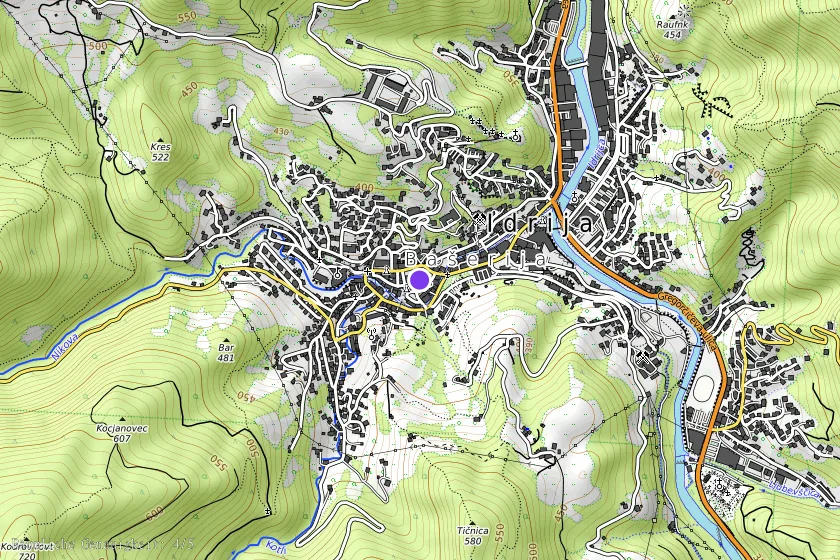
Coordinates (WGS84)46.00059° N, 14.02214° E