PoH-Code: poh.29013
Bunker, Vogrsko
—
partizanstvo.si / Arhiv Geopedia · CC-BY 4.0 (privzeta licenca) · Preneseno iz Geopedije.
Kmetija
was one of the central points where the first patriots and activists for the liberation of the territory, which had been annexed to Italy after the Rapallo Treaty of 1920, gathered. The memorial plaque was installed on the façade in 1951.
After the collapse of the Austro-Hungarian monarchy's army on the Piave River in 1918, the Italians occupied the entire coastal region and began the process of Italianization of the population, which resisted in various ways.
Among the most notable individuals on both social sides were France Bevk and Frančišek Sedej Borgia.
At the Barabon kmetija, Peter Fornazarič, during the Italian war against Ethiopia (1935–1941), built a bunker with the purpose of storing gunpowder, white flour, and other items, which the Italian authorities seized for the army. However, the space was never used for this purpose. In 1939, Peter began using the bunker for a bakery, which was prohibited or strictly controlled under Italian rule (special tax, registration, and sealing of stoves).
The construction of the bunker was done by the local worker Ambrož Lutman, who was very cautious due to the presence of Italian immigrants (colonists) in the neighboring house, belonging to the Central family.
After the attack on Yugoslavia on 6 April 1941, Italy established control over Ljubljana and Dolenjsko with Bled in May 1941. The Communist Party of Yugoslavia (KPS) adopted a decision on the liberation of the Slovene coast on 15 June 1941, after which the most important activists began to arrive in the area.
Besides the significant activities of the TIGR movement (1927–1941), the first sign of resistance on Gorica is considered to be the meeting on Kremanca above Renca on 8 July 1941.
The second gathering took place on 6 April 1942 at Skalnica above Solkan, when the KPS also joined the resistance and established a new Regional Committee of the KPS for the coastal area in the Slovene coast.
The beginning of organized work for the Liberation Front on Vogrsko can be seen in the establishment of a local or field committee of the Liberation Front (OF) in early February 1942 in the house of Oskar Gorjan on the Pohorje, where the program of the OF was explained (writing slogans, cutting telephone wires, tearing down telephone poles, propaganda, recruitment of new members of the OF, and large-scale conspiracy).
Peter Fornazarič and his wife Olga (born Žižmond) allowed and enabled the use of all their spaces on the kmetija, including the hidden bunker.
The entrance to the bunker through a wooden beam, which was located in the pigpen, was Peter's own idea. The bunker was never discovered, despite the leak.
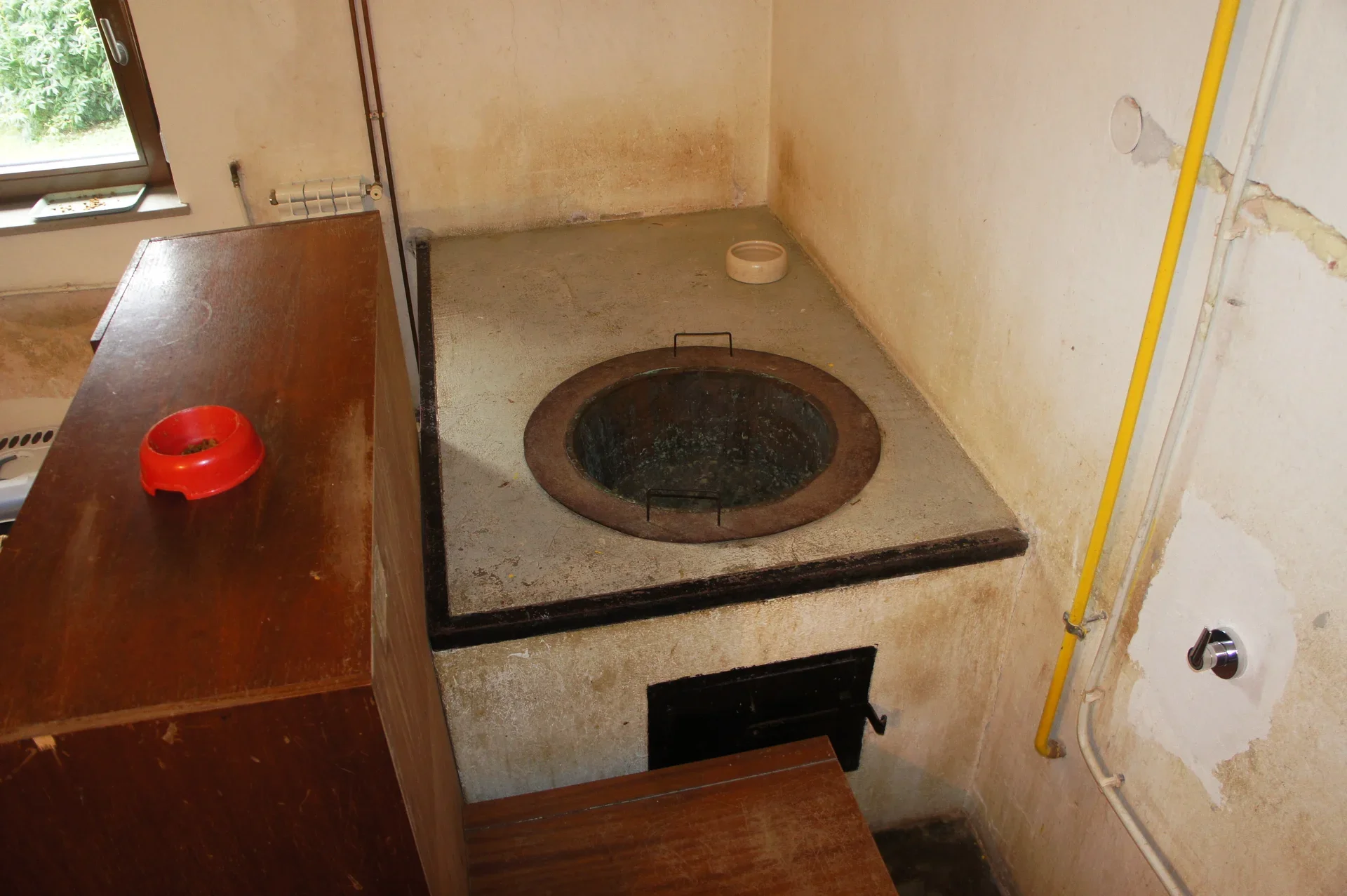
The location of the wooden beam is on a movable plate on the floor, under which there are steps to the bunker. In the bunker there is a table with two chairs, a bed, a radio, two electric stoves (the bunker had already been electrified at that time). Through the opening for the chimney, they could place a stove.
Tomo Brejc, as a leading activist, lived with Olga's uncle Feliče Žižmond (locally known as Andrejčevi) after moving to Vogrsko. When he first attended a meeting of the conscious women, which Olga had called, he also came with Julij Beltram. At that time, Olga showed him the hiding place under the wooden beam.
One day, Tomo Brejc confided that they urgently needed exactly this safe space for someone coming from the White Lands. That same evening, he brought Aleš Bebler, a key person in the NOB, a trusted member of the CK KPS, and a trusted member of the Executive Committee of the OF and the Chief Command of the Slovene partisan units for the coast (1942–1944).At Barabon's home, during the period from autumn 1942 to spring 1943, activists of OF operated: Tomo Brejc - Pavle, Aleš Bebler - Primož, Franc Leskošek - Luka, Anton Velušček - Matevž, Julij Beltram - Janko, Branko Babič - Vlado, Mirko Bračič, Dušan Pirjevec - Ahac and others.
In December 1942, Ivan Kerševan - Črni Martin appeared on Vogrsko, who later revealed the bunker on Vogrsko and numerous other bunkers and people throughout the entire Vipavski valley (300 people).
Memories
of the persecution from Goč (1943) - Vipavska.eu (javnost.si)
On 10 March 1943, Črni Martin brought a Tržaška kvestura to Vogrsko for a hunt on Aleš Bebler, who was hiding in the bunker at that time. Fifteen trucks, three personal cars of officers, a special car with a spotlight and two with radios arrived. Despite the torture, Olga did not reveal anything after six hours of interrogation. She was then taken, exhausted and beaten, to Tržaške zapore, where she was confronted with her husband Petre, who had been imprisoned on 11 January 1943, after the Italians carried out a massacre following the liquidation of three Italian soldiers. As a result, 2000 soldiers went through the houses and arrested 14 men, among them Petre. At that moment, a meeting of Aleš Bebler, Anton Velušček, Franc Leskošek, Branko Babič, Dušan Pirjevec and Blaž was taking place in the bunker.
Exactly because of the good camouflage of the entrance through the chimney of the fireplace, the bunker was never discovered.
Today, in the bunker of Pr' Barabon, there is a museum about the events and happenings of the cruel wartime period of the NOB, where visitors experience the description of coastal people in the great liberation battle and a plastic representation of the situation, people, mood, political maturity and unlimited willingness to sacrifice for the liberation of their homeland.
For the better, a broadcast
on tourism. RTV SLO.
Julij Beltram: Vogrsko in the mirror of time
Branko Babič: The coast did not yield - memories of the war years.
Aleš Bebler: Through the drn and strn – memories.
Jože Pirjevec: Partisans.
Cita Bole Ferjančič: Prekomorke.
Rado Zakonjšek: Partisan couriers.
RTV
SLO, The unique bunker, where activists gathered for the liberation of the coast.
Translation · AI tier 5
Sources
- Partizanstvo.si — Partizanski spomeniki (#5151) (f15acdc8-4d77-4fcc-982a-4916c3dec0a3) — Partizanstvo.si — Partizanski spomeniki (#5151)
Links
Location & map
Map position available (Point) · spatial accuracy: 4 — Accurate
Textual location description
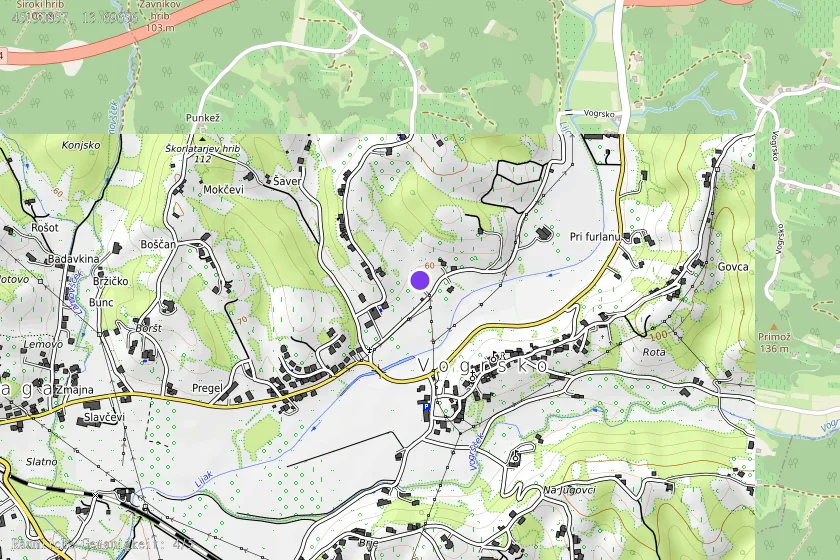
V hiši Vogrsko 129, na več kot sto let stari Barabonovi kmetiji v vasi Vogrsko, na desnem bregu potoka Lijak, dobra dva kilometra od železniške postaje v Volčji Dragi.