
PoH-Code: poh.33389
Grabanlage for Prisoners of War, Forced Laborers and Political Victims in the Soldiers' Cemetery Amras
—
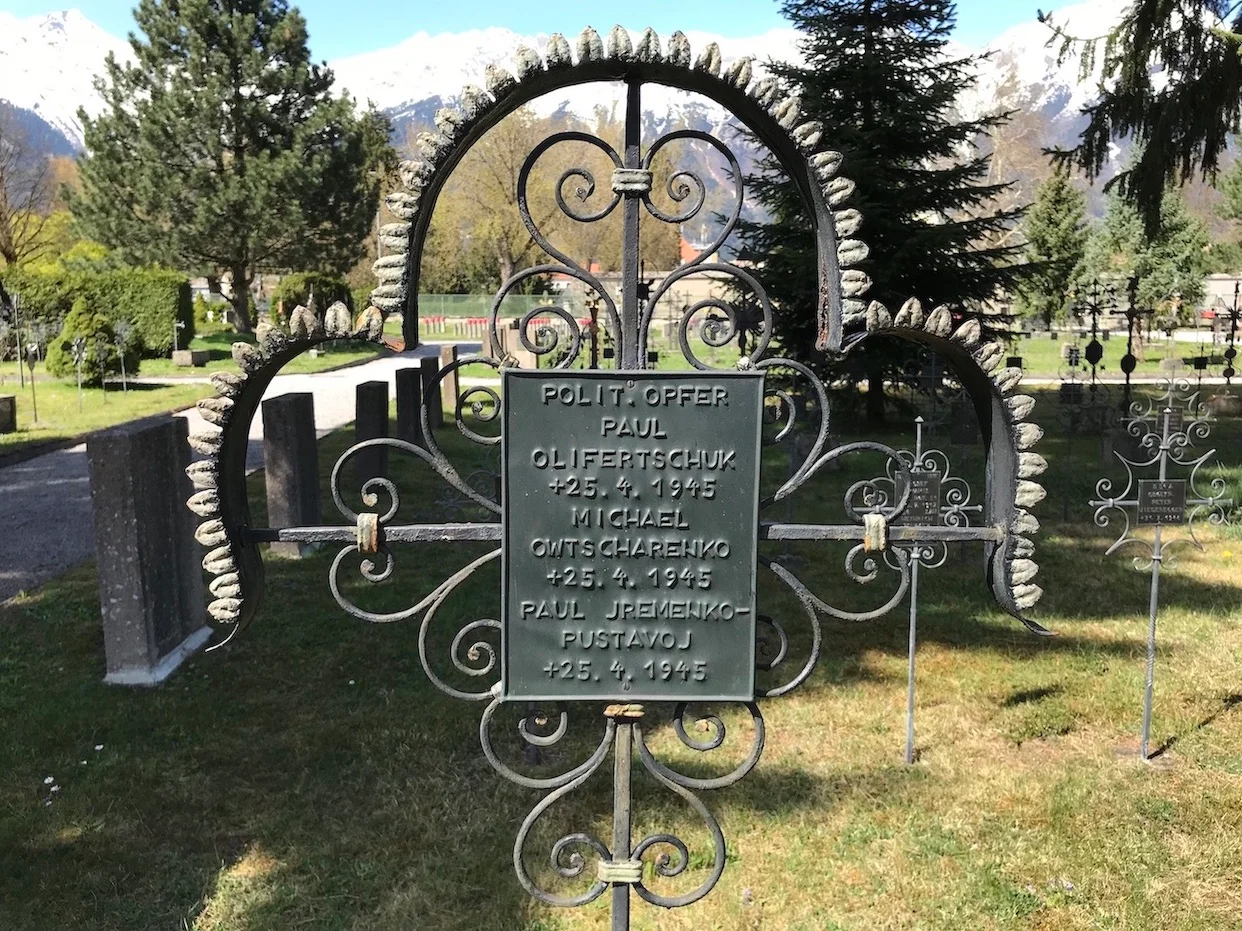
Grabanlage im Soldatenfriedhof Amras, 2019 (© Selina Mittermeier)
Grabanlage im Soldatenfriedhof Amras, 2019 (© Selina Mittermeier) · CC-BY-NC-4.0 · gams.uni-graz.at
The soldiers' cemetery in the Amras district of Innsbruck is the largest war cemetery in Tyrol, established in 1917 and continuously expanded after 1945. In a cemetery field established from 1949 for victims of World War II who had previously been buried in civil cemeteries, soldiers of the Wehrmacht, SS men, bomb victims, prisoners of war, forced laborers, and political victims are buried, such as the Ukrainians Paul Olifertschuk, Paul Jremenk-Pustavoj, Michael Owtscharenko, shot by the Gestapo for resistance activities, or Stefan Widla and Jan Kosnik, hanged for forbidden contact with local women. For the Black Cross, the organization responsible for the site, the cemetery is a sign of tolerance, reconciliation, and interethnic understanding. The organization cares for all the dead with equal care; they are intentionally not separated by nation and confession, but buried next to each other, and their graves are uniformly designed regardless of the cause of death. Critics criticize this uniform treatment, which makes everyone equally war victims.
Translation · AI tier 7
Sources
- DERLA — Grabanlage für Kriegsgefangene, ZwangsarbeiterInnen und politische Opfer im Soldatenfriedhof Amras (6ad29488-919d-4adf-b3df-9b495279564c) — DERLA — Grabanlage für Kriegsgefangene, ZwangsarbeiterInnen und politische Opfer im Soldatenfriedhof Amras
Evaluations
- Access (from 07/19/2026): Open access
- Spatial accuracy: 4 — Accurate
Location & map
Map position available (Point) · spatial accuracy: 4 — Accurate
Textual location description
Ecke Wiesengasse / Amraser Straße, 6020 Innsbruck
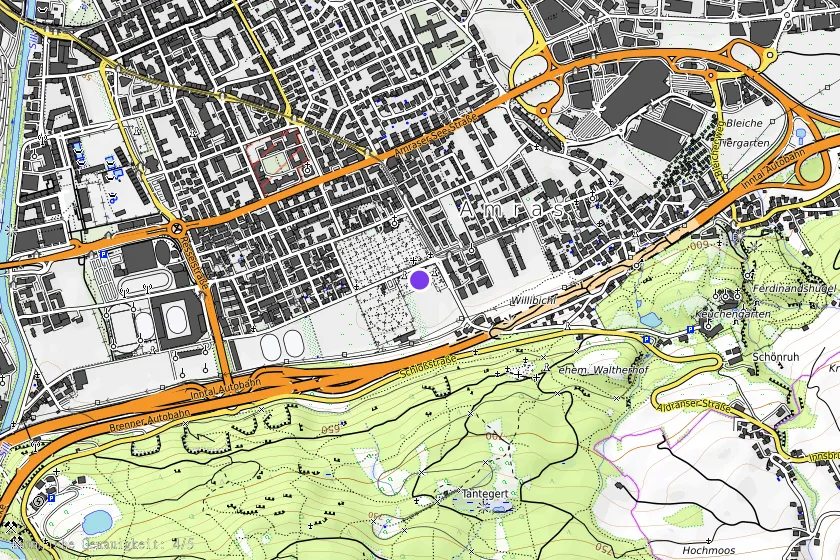
Coordinates (WGS84)47.25715° N, 11.42160° E