PoH-Code: poh.28788
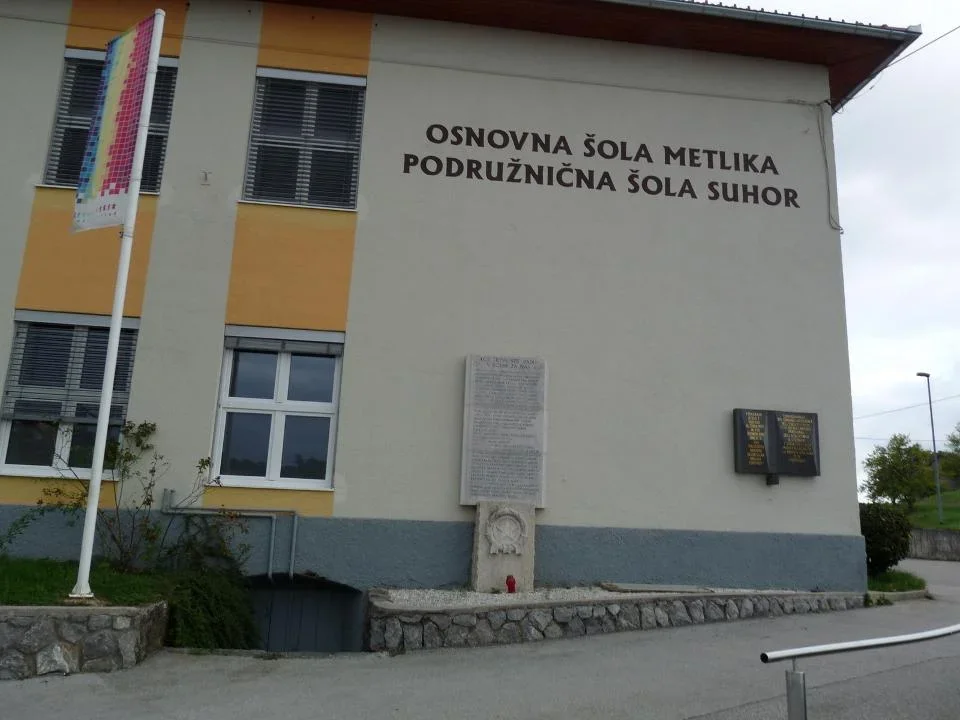
DOLNJI SUHOR - Memorial to the Establishment of the First Italian Partisan Brigade
—
partizanstvo.si / Arhiv Geopedia · CC-BY 4.0 (privzeta licenca) · Preneseno iz Geopedije.
Memorial plaque was unveiled on December 20, 1964.
Historical background
On July 31, 1944, the German occupier in the Adriatic Littoral operational zone ordered compulsory mobilization of all men born between 1914 and 1926. At the same time, the Italian resistance movement emerged and issued proclamations, in which the partisans called on people to join instead the German army, to join the liberation army. In the following months, the result of this was the departure of more than two thousand youths and men to the partisans. Most of them came from Trieste, Miren, Koper, the lower part of Friuli, the area around Gradiska, and especially from Trbošće. More than half of them reinforced the Trbošćka Shock Brigade and the Mazzini Battalion, while the remaining – about a thousand fighters – were sent to the Slovenian territory. At first, they performed various tasks on the liberated territory, while the formation of an Italian brigade, which they would compose, was already being prepared. By the decree of the Main Staff of the National Liberation Army and the People's Liberation Front of Slovenia, the 24th Brigade of the National Liberation Army and the People's Liberation Front of Slovenia – the Italian National Liberation Brigade Fratelli Fontanot with approximately 800 fighters in three battalions – was established on December 17 in the village of Dolnji Suhor near Metlika. Initially, the brigade was part of the 18th Division of the National Liberation Army and the People's Liberation Front of Slovenia and participated in the battle in the Suha Krajina between January 19 and 23, 1945, which was one of the largest battles in the Slovenian National Liberation War. The official language in the brigade was Italian, and its identifying sign was a Yugoslav tricolor with a five-pointed red star attached by a stripe with the colors of the Italian national flag. The first commander of the brigade was Giovanni Papparazzo, while two political commissars were known: Mario Abram (a journalist after the war and a social-political worker) and Mara Rupena, a teacher and political worker, who wrote about the fighters of the brigade that they were pitied by the local population, because the local population did not care for them due to their origin.
On April 30, the Fratelli Fontanot Brigade merged with three weakened brigades of the Garibaldi Natisone Division into a new Italian Division Garibaldi Fontanot. The Garibaldi Natisone Division became part of the NOVJ on November 7, 1944. The Main Staff of the JA for Slovenia decided to move it from the 9th Corps to the 7th Corps of the NOVJ due to losses in the enemy's offensive of March 1945 and possible complications in the event that the western allies' forces would push towards Ljubljana. Following the mentioned merger with the Fontanot Brigade into the Garibaldi Fontanot Division, the latter counted 1,026 fighters and from then on operated as the corps reserve of the 7th Corps. It participated in the liberation of Ljubljana and on May 20, 1945, it also arrived in Trieste.
Sources:
Zdravko Klanjšček et al., Narodnoosvobodilna vojska na Slovenskem 1941 – 1945, Ljubljana 1978, pp. 894 and 938–939.
Franc Benedik, Albert Jakopič, Vodnik po partizanskih poteh, Ljubljana 1978, pp. 138.
Alenka Šelih et al., Pozabljena polovica: portreti žensk 19. in 20. stoletja na Slovenskem, Ljubljana 2007, p. 569
EŠD 11209
Vodnik, 21–24
Vodnik po partizanskih poteh, Ljubljana: Založba Borec, 1978, pp. 138.
Sources of images: photographs used with the author's permission, available at: http://spomeniki.blogspot.si/2012/05/dolnji-suhor-pri-metliki-spomenik-14.html
Establishment of the Italian Partisan Brigade FontanotAt the call of the Italian resistance movement, more than 2000 men from the areas of Trieste and Tržič joined the partisan units instead of enlisting in the German army. Half of them were sent to the White Lands, where they performed various tasks, while at the same time they were preparing for battle. By the order of the Main Staff of the National Liberation Army and the People's Liberation Army of Slovenia, on December 17, 1944, at Suško, the 24th Brigade of the National Liberation Army and the People's Liberation Army of Slovenia—Italian People's Liberation Brigade Fontanot—was established, consisting of approximately 800 fighters, organized into three battalions. The official language of the brigade was Italian, and on the Yugoslav trumpet with a five-pointed red star, a strip with the colors of the Italian national flag was also attached.
The first commander was Giovani Papparazzo, and the political commissar was Marie Abram. The brigade was included in the 18th Division of the National Liberation Army and the People's Liberation Army of Slovenia. From the end of April 1945, it together with the Garibaldi Brigade formed the Italian Garibaldi Fortanot Division.
The memorial plaque at the primary school in Suško was unveiled on December 20, 1964.
Source: archive of ZB NOB Metlika (84)
Translation · AI tier 5
Sources
- Partizanstvo.si — Partizanski spomeniki (#777) (4907a4c6-dc05-4f5b-a12c-bf8433ceaa33) — Partizanstvo.si — Partizanski spomeniki (#777)
Links
Location & map
Map position available (Point) · spatial accuracy: 4 — Accurate
Textual location description
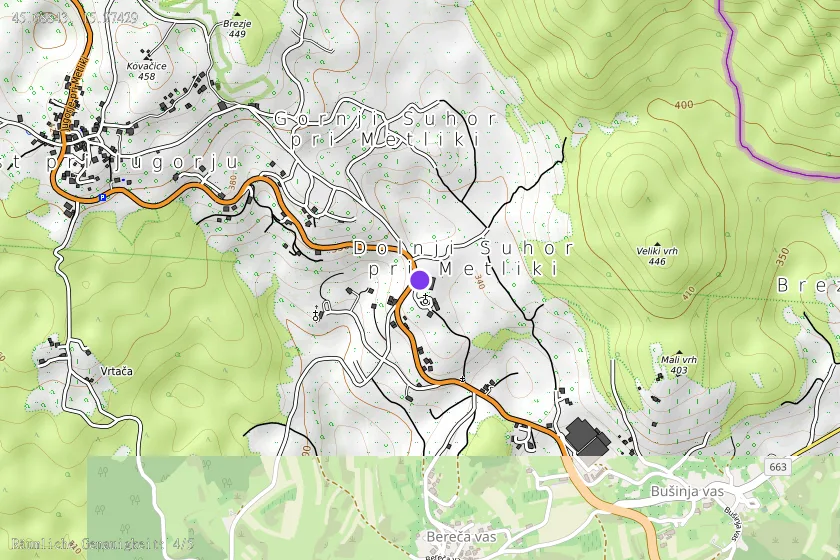
Plošča je pritrjena na Osnovni šoli v Dolnjem Suhorju, ki stoji v neposredni bližini župnijske cerkve sv. Jožefa. Pritrjena je na tisti strani zidu, ki je obrnjena proti spomeniku 14. diviziji. Dolnji Suhor pri Metliki 1