PoH-Code: poh.18614
Gestapovski Zapori Stalag XVIII D (306)
—
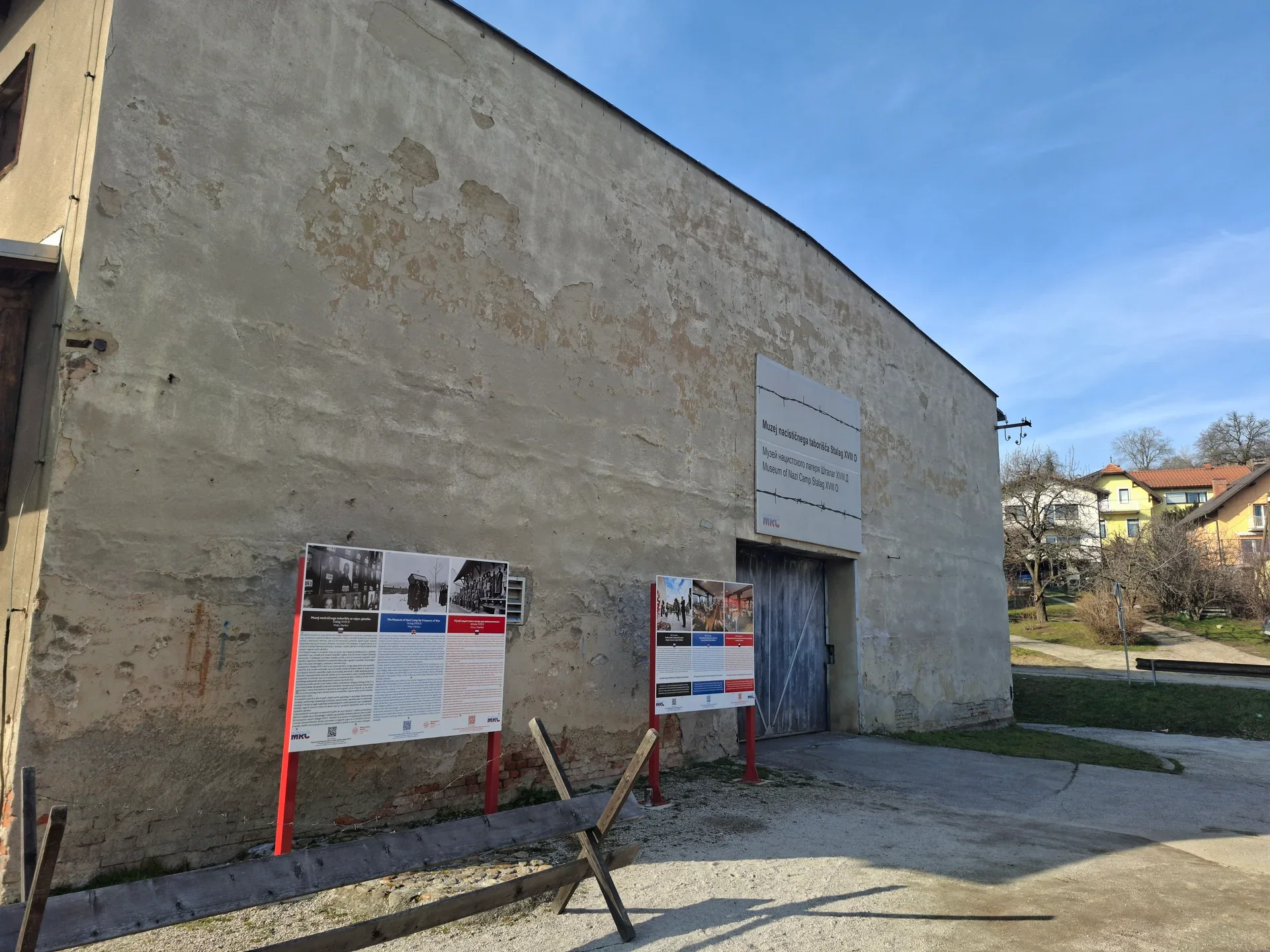
MRC Marec 2026 - nove table pred MRC
GS · CC-BY-4.0 · partizanstvo.si
Here was a German prisoner-of-war camp from 1941–1945 (originally Stalag XVIII D or 306). In October 1942, STALAG XVIII D was transformed into the so-called Stammlager or Manschafts-Stammlager (basic camp for prisoners of war and soldiers), and later in 1944 into the so-called Gewehr Gewirkkschaft GV 1044, where prisoners were used for military production.
The old warehouse CARINARNICE was opened as an international significant museum space (MRC Maribor) on 8 July 2014, thanks to the perseverance of Mr. Eduard Vedrenjak, since people of various European nationalities endured here during the destructive violence of the German occupier.
Here the Nazis gathered thousands of forced laborers, and shortly after, in July 1941, British military prisoners captured in Greece occupied the barracks. At the peak of occupancy, on 1 January 1942, 15,600 prisoners of war were living and dying in the camp. In October 1942, it was transformed into the so-called Stammlager.
Most prisoners of STALAG XVIII D were assigned to other camps after being imprisoned, so the number of deaths in this camp does not even approximately match the number of prisoners. The fates of the dispersed prisoners have not been investigated.
In the documents of the German High Command, it was first mentioned on 1 June 1941, when there were 3,838 Yugoslav and 208 British military prisoners in the camp. During the period between September and December 1941, the Nazis brought 1,432 Soviet military prisoners to Stalag XVIII D. On 1 January 1942, there were already 5,192 prisoners in the camp. The occupier placed them in the customs warehouse. Prisoners were fed with uncooked vegetable waste and similar, so they died of starvation, epidemics and overcrowding. By April 1942, 2,000 had died in the warehouse, 300 survivors were transported near Dravograd, where they died quickly from work. In October 1941, about ten people died each day.
The conditions in which the Soviet military prisoners had to live in Maribor were, in terms of brutality, no different from those in the worst Nazi concentration camps, such as Dachau, Auschwitz, Mauthausen, and others.
The deceased were buried by British military prisoners from adjacent barracks. This was a penal task introduced already for minor offenses, and dangerous due to the horrifying hygienic conditions. G. Vedrenjak obtained testimony from a still living former prisoner who had performed this task (2009). The deceased prisoners (residents of SZ of all nationalities, mostly Ukrainians) had to be placed in wooden boxes and transported to nearby dug-out graves between the railway and Stolni Vrh. Civilians immediately covered them with live earth.
EŠD 30244
Museum of Soviet Prisoners of War. Free Speech 58 (2020), 6.
Eduard Vedrenjak: FROM REBELLION TO INTENTION (STALAG XVIII-D); 2010
Helena Ponudič Štalag 18D (Research Assignment within the Framework of the Program Mladi za Napredek Maribor; 2015)
Marjan Žnidarič: To Hell and Back (1997)
International Research Center of the Second World War Maribor
Translation · AI tier 5
Sources
- Partizanstvo.si — Partizanski spomeniki (#2195) (f073e06a-5ff7-49c6-86b0-27dd5b11c10f) — Partizanstvo.si — Partizanski spomeniki (#2195)
Links
Location & map
Map position available (Point) · spatial accuracy: 4 — Accurate
Textual location description
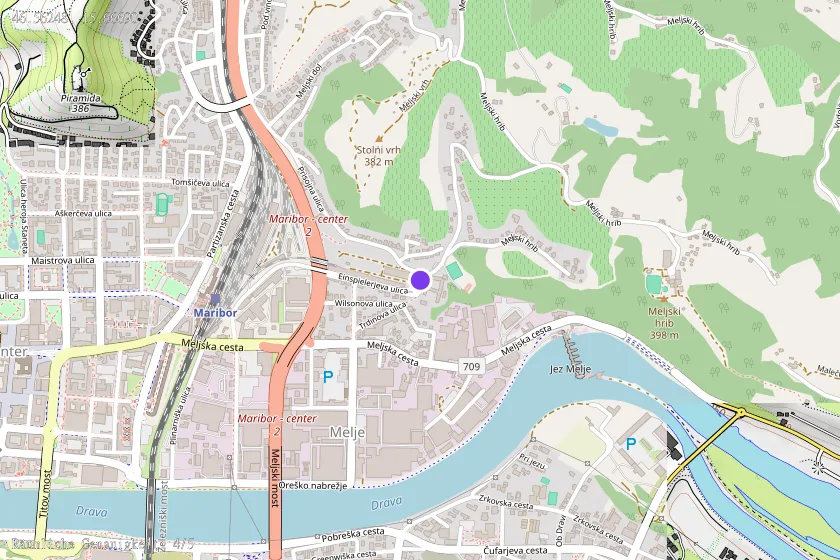
Na vzhodni, obcestni fasadi opuščenega carinskega skladišča vzhodno od železniške postaje, na koncu Prisojne ulice v Mariboru, četrt Melje.